You have never said this out loud to anyone. That is exactly who I wrote it for.
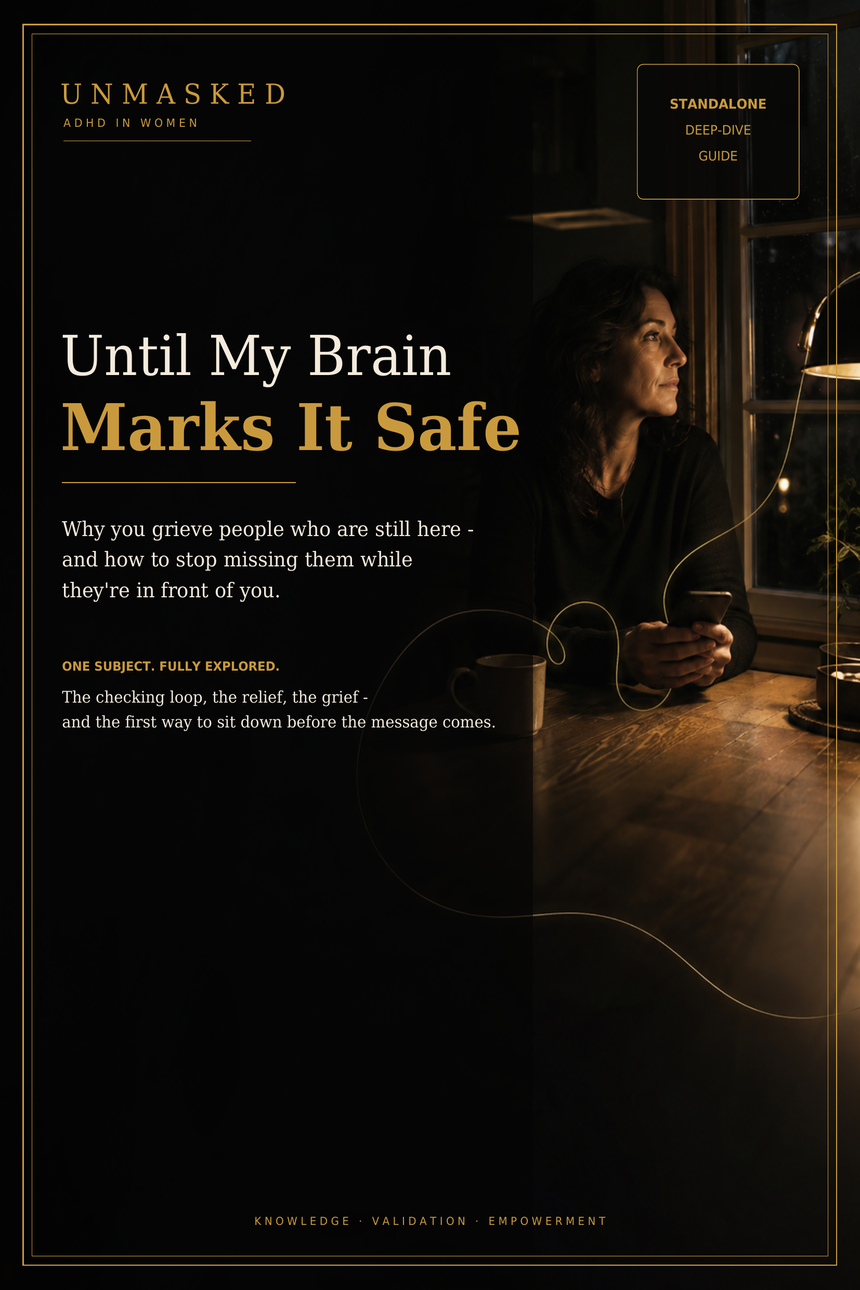
STANDALONE DEEP-DIVE GUIDE
Until My Brain Marks It Safe
Why you grieve people who are still here — and how to stop missing them while they're in front of you.
Launch price £9 · usually £12
21-page PDF · instant download · yours to keep · 14-day refund
Is this you?
Is this you?
Your grown child goes out for the evening and your brain shows you the car crash. Not a worry — a scene. Fully lit, on a road you know, with a phone call you can hear.
- You cannot properly sit down until you know they're home
- You keep the television on so the house doesn't go quiet
- You hear a siren and work out whether it's going the way they went
- You have cried about a pet who is asleep on your leg, alive and completely fine
- You have thoughts you would never say out loud to anyone
- You tell yourself you're being silly, and you keep every bit of it off your face
What's inside
What's inside
- Why the relief when they get home is the thing keeping the loop running — and why "try to worry less" was never going to work
- The three stages that built this: a lifetime on high alert with undiagnosed ADHD, every hard thing since adding a layer, and menopause turning the volume up a hundredfold
- Why sudden loss changes your brain's maths permanently, and why being told you're irrational doesn't touch it
- Intrusive thoughts explained plainly — including the ones you would never repeat
- The single change that gave me my evenings back: swapping the hunt for an agreement
- Six things to do on the night the message hasn't come and it's later than it should be
- When it's more than this, and the exact words to say to your GP
Who it's for
Women who love people so hard they grieve them early. Mothers of grown children with nowhere to put any of it. Anyone who has lost someone suddenly and has been checking ever since. Late-diagnosed, undiagnosed, or just starting to wonder.
Who it isn't for
Anyone looking for clinical treatment or a therapy programme. This is lived experience written plainly, with honest signposting — not medical advice.

A note from me
A note from me
I didn't write this from a textbook. My children are grown adults with their own front doors, and I still can't properly sit down until I know they're home.
I did that for forty years before anyone told me why. Then my mum died suddenly and it got worse, and then menopause turned the volume up by a hundred.
It took a late ADHD diagnosis for me to understand I was never being irrational. I was being consistent with the evidence I had.
This is the whole of it, including the part about my dogs I have never said out loud to a single person.
FAQ
FAQ
Is this the same as the free article?
No. The article is the recognition. The guide is where it came from, why midlife made it so much louder, and what to actually do — including the night the message doesn't come.
Do I need an ADHD diagnosis?
No. Plenty of women reading this are undiagnosed or only just starting to wonder. Nothing in it depends on having a label.
Is it medical advice?
No, and it doesn't pretend to be. It's lived experience written plainly, with a proper section on when to speak to your GP and what to say.
What do I actually get?
A 21-page PDF, instant download, yours to keep. 14-day refund, no explanation needed.
You are not going mad. You are on high alert.
And it was built in stages — which means it can be taken down in stages.
Get the guide — £9Launch price. Goes to £12 on 12 September 2026.
This guide is for educational purposes and is not intended to replace professional medical advice, diagnosis or treatment. If your worry, checking or intrusive thoughts are severe, constant, or affecting your daily life, please speak to your GP. If you ever reach the point where you cannot see a way through, the Samaritans are on 116 123, free, any hour of the day or night.