I Grieve People Who Haven't Even Died
Anticipatory grief, an ADHD brain that rehearses the worst, and why it isn't morbid.
Read the answerThen menopause unmasked my ADHD.
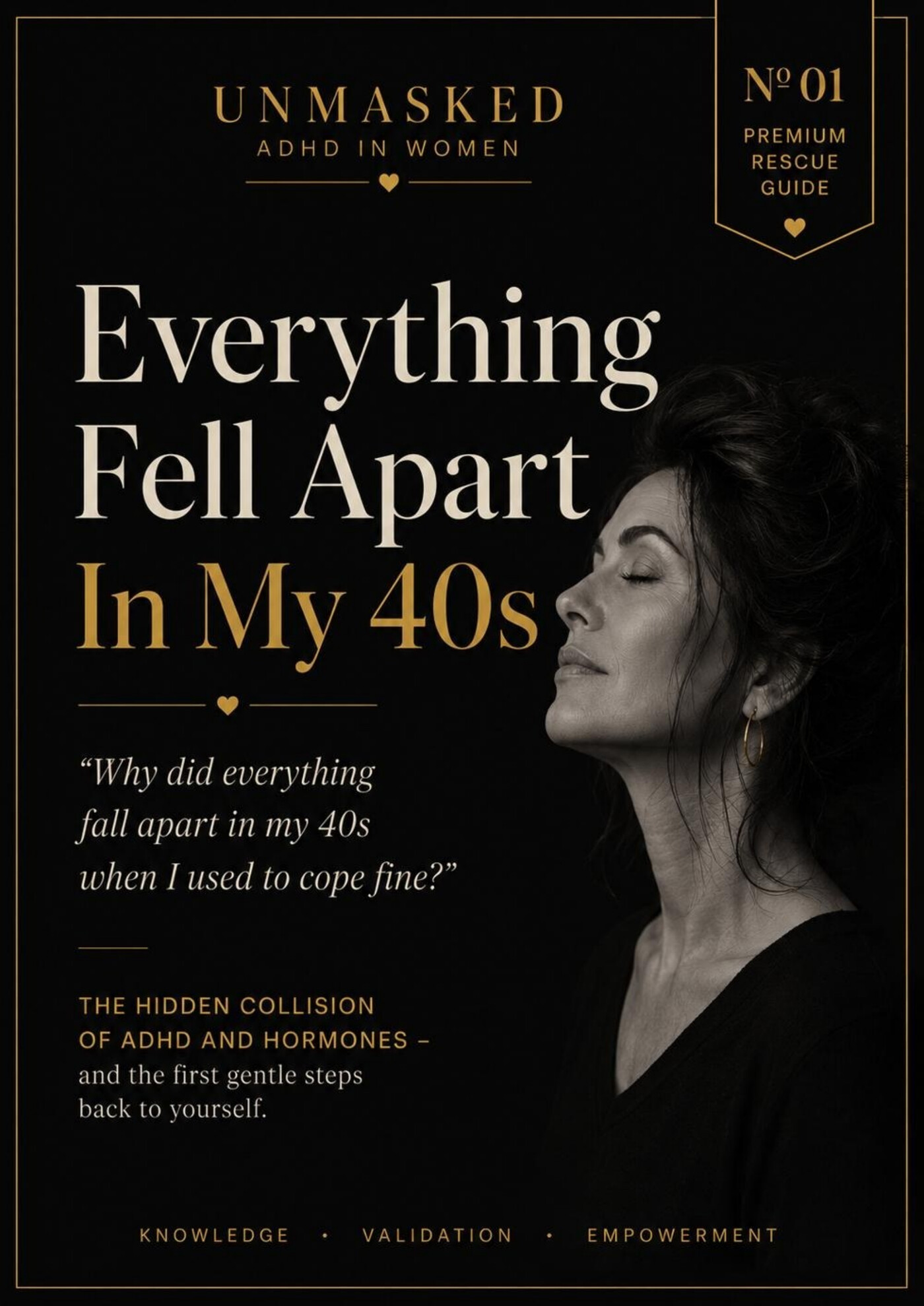
I had coped for years. Then the words started disappearing, rest stopped touching the exhaustion, and ordinary tasks became impossible to hold together.
If your brain suddenly feels unfamiliar — and you keep wondering why you cannot cope anymore — you are not imagining it.
You have not suddenly become lazy, weak or incapable.
A calm explanation first — you decide what to do after reading.
Ordinary words disappear halfway through a sentence.
Small tasks feel impossible to begin.
Noise, mess and demands feel unbearable.
You are exhausted from appearing to cope.
Your emotions feel much harder to contain.
You keep wondering what happened to the woman you used to be.
For many women, menopause does not create ADHD. But ADHD and menopause — or ADHD and perimenopause — often collide in midlife, when hormonal change makes lifelong patterns much harder to mask or manage.
If new, severe or worsening memory, focus or mood changes are worrying you, please also speak to your GP. Some symptoms deserve a proper medical check, and only a qualified professional can tell you what is behind them.

I'm Laura. At 44 I had a full hysterectomy, was sent home with HRT patches and no warning about what was coming. For two years I thought I was losing my mind — forgetting words mid-sentence, leaving the oven on, rereading the same email ten times, crying in the car over nothing.
Everyone said menopause. It wasn't only menopause. It was ADHD I'd masked my whole life — and menopause had quietly stripped away everything that let me hide it. The day I finally understood, everything made sense. I built all of this because nobody handed me anything when I needed it most.
I share lived-experience educational support — I am not a doctor, therapist or ADHD diagnostician, and nothing here replaces medical advice.
Anticipatory grief, an ADHD brain that rehearses the worst, and why it isn't morbid.
Read the answerWhy perimenopause can strip away the systems that quietly hid your ADHD for decades.
Read the answerWhy an already overloaded ADHD brain can suddenly feel frighteningly unreliable in midlife.
Read the answerMaking peace with a diagnosis that came too late.
Read the answer
The brain, the hormones and why you may suddenly feel as though you have stopped coping.
Watch free