You managed your life. Then something changed.
The words started disappearing. Rest stopped touching the exhaustion. Ordinary tasks became too much — and you quietly began wondering what had happened to the woman you used to be.
You are not imagining it. You have not suddenly become lazy, weak or incapable.
Instant digital access · Read on your phone or print · 14-day refund
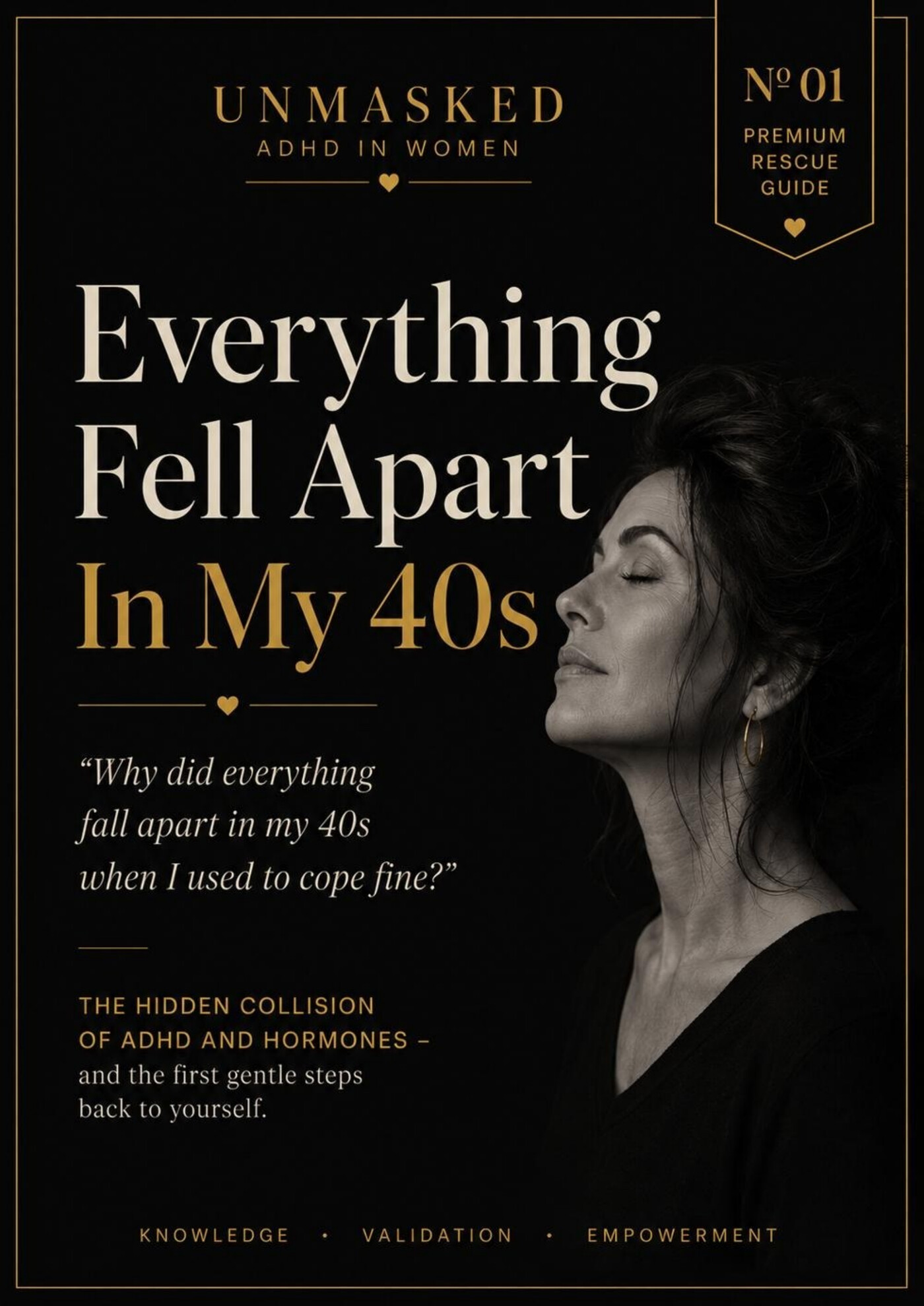
Premium Rescue Guide · Nº 01
You used to cope. Now everything takes more effort than you have.
You may still look capable from the outside. Inside, you are using all your energy trying to remember, begin, finish and keep your emotions contained.
- Words vanish halfway through a sentence.
- You walk into a room and cannot remember why.
- Rest no longer fixes the bone-deep exhaustion.
- Simple tasks feel too large to begin.
- Noise, mess and demands feel unbearable.
- Your emotions arrive faster and feel harder to contain.
- You keep asking, “Why can't I cope anymore?”
- You have worried about early dementia and told nobody.
What if you did not suddenly become incapable? For some women, perimenopause or menopause makes lifelong ADHD patterns much harder to mask and manage. The coping systems that held everything together can stop working — and the change can feel frightening.
This is not about giving yourself another thing to finish.
It is a short, plain-English starting point that helps you make sense of the collision between hormonal change, brain fog, overwhelm and previously unrecognised ADHD patterns.
“There may be a reason this became harder — and there is a calmer way to understand what comes next.”
To turn “What is happening to me?” into a clearer next step.
Open it when you are ready. Go straight to the part that sounds like today.
- 01
Understand the shift
See why previously manageable patterns may feel louder during perimenopause or menopause.
- 02
Make sense of the fear
Understand why lost words and unreliable recall can feel so frightening — without dismissing symptoms that need checking.
- 03
Separate shame from symptoms
Replace “I am failing” with clearer language for brain fog, exhaustion, overwhelm and task paralysis.
- 04
Prepare what to say
Use the calm checklist to organise the changes you want to discuss with your GP.
Not a diagnosis. Not a cure. A place to finally begin.
This cannot tell you what is causing your symptoms. It can help you describe what changed, understand a pattern many women recognise, and prepare for the right professional conversations.
Before
- Searching at 2am and frightening yourself
- Calling yourself lazy because you cannot begin
- Trying to explain everything while your mind goes blank
- Wondering whether you are the only one
After reading
- Have clearer words for what changed
- Understand why menopause and ADHD may collide
- Know what deserves a conversation with your GP
- Have one calm next step instead of fifty tabs open
I made the starting point nobody gave me.
I'm Laura. After a full hysterectomy, I spent two years thinking I was losing my mind. Words disappeared, ordinary tasks became difficult, and the brain I had relied on all my life stopped feeling familiar.
Menopause was part of the story. So was ADHD I had unknowingly masked for decades. I made this because I needed someone to explain the connection plainly — without shame, jargon or pretending one answer fixes everything.
Educational support based on lived experience. I am not a doctor, therapist or diagnostician, and this does not replace medical advice.
“You did not suddenly become a different woman. Something changed — and understanding that change is where you begin.”
Everything Fell Apart In My 40s
A calm, practical first step for the woman trying to understand why her brain, energy and ability to cope suddenly feel different.
£9.99- ✓ Instant access
- ✓ Yours to keep
- ✓ 14-day refund
Secure checkout handled by Stan · Instant digital download · If it is not right for you, email within 14 days for a full refund.
Still unsure whether ADHD could be part of this? Take the free two-minute reflection.Questions your overloaded brain may be asking
Do I need an ADHD diagnosis?
No. It is for women who are diagnosed, waiting for assessment or only beginning to recognise the pattern. It cannot diagnose you.
Will this cure my brain fog or exhaustion?
No. It does not promise to treat or cure symptoms. It helps you understand possible patterns, organise what has changed and prepare for appropriate professional support.
Should I still speak to my GP?
Yes. New, severe or worsening memory, focus, mood or physical symptoms deserve a proper medical check. Only a qualified professional can determine what is causing them.
Is this another large course?
No. It is instant digital support you can read on your phone or print. There are no videos, deadlines or lessons to keep up with.
What if it is not right for me?
Email hello@adhdinwomen.uk within 14 days for a full refund. You do not have to justify choosing what is right for you.